Sunday, March 28, 2021

 UPCYCLING....


There are sooo many things that humans produce and use, but what happens when we are finished using them? Car tyres need to be replaced for road safety regularly. But what happens with the old car tyres? They do not biodegrade and worldwide we dispose of hundreds of millions of car tyres every year! Up until the 1980s car tyres were stockpiled in landfills. There are an estimated 2-3 billion car tyres deposited in landfills. You cannot burn car tyres because burning old rubber releases dangerous toxins into the air. Today most old car tyres are recycled in special recycling plants. 


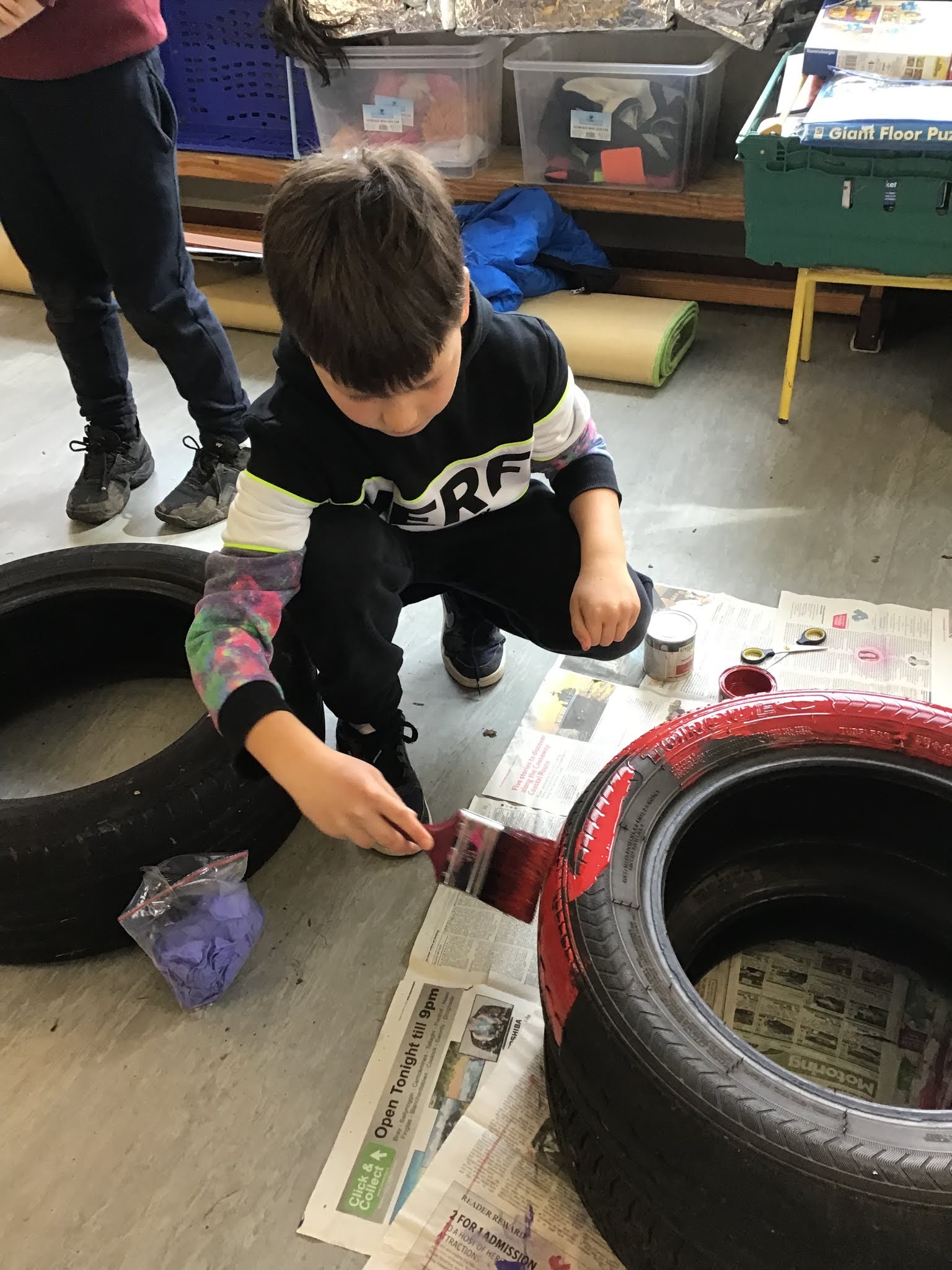
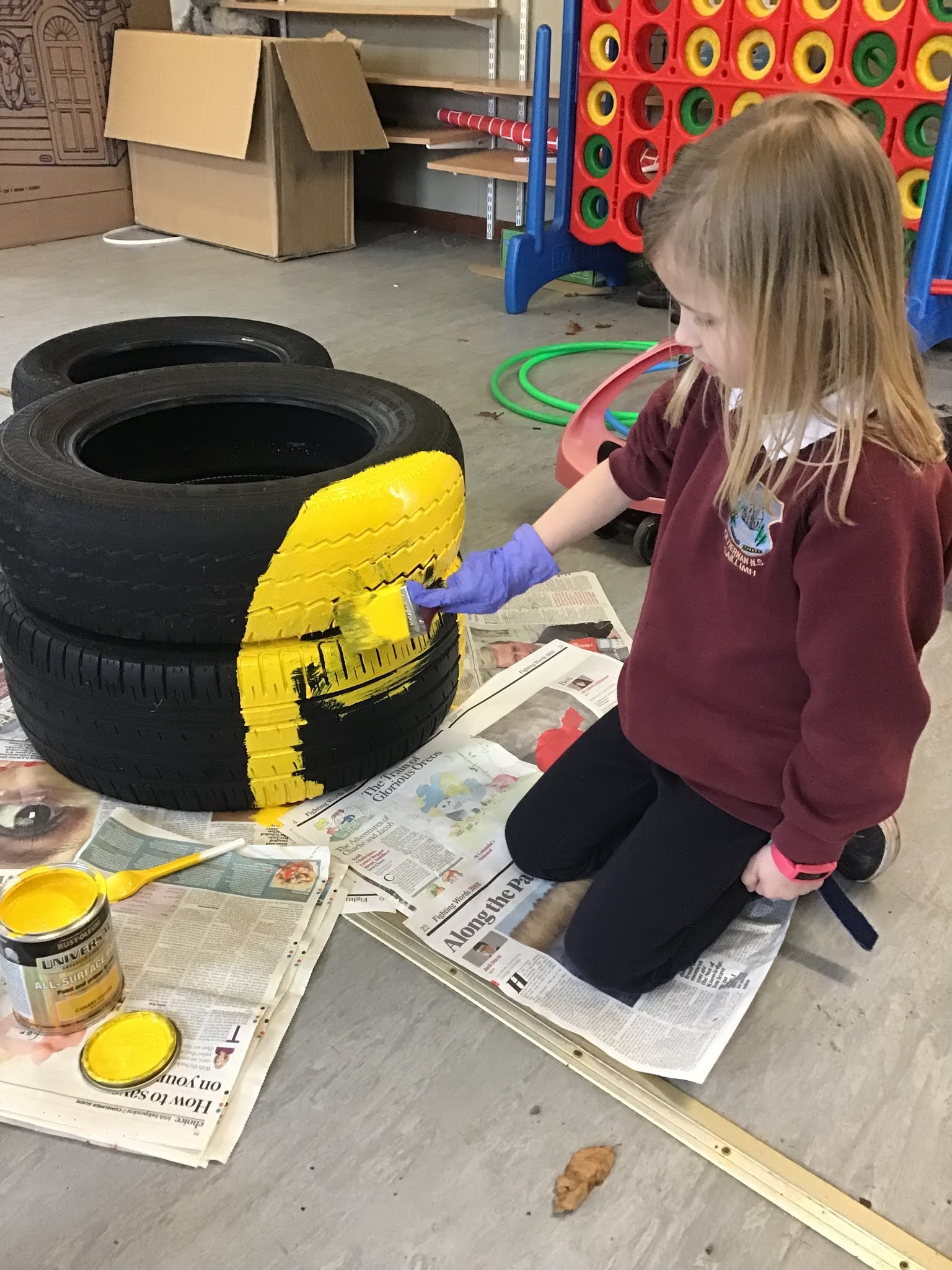
Given our connection to the Motorway we decided to use old car tyres for our upcycling project. We are giving them a new lease of life and transform them into planters for our school garden.   


Tyre Aware in Ballindereen kindly gave us some old car tyres we could upcycle. After washing off the dirt, we painted our tyres inspired by our pollinator friends. 


We will plant our car tyres in spring and fill them with pollinator friendly herbs to provide nectar and pollen for bees and other pollinating insects!

Thursday, March 11, 2021

 Blessing of the Bees

Fionn (2nd Class) - "The Priest Blessing the Hive"

The Blessing of the Bees is a tradition that goes back centuries in Ireland. Ancient Irish manuscripts reveal bees were sacred animals and they were brought to the country from Wales in the 5th century, by a Saint named Modomnóc, also know as Modomhnóg.


At some point, every home in Ireland would have had access to a beehive. They used honey as a form of adding sweetness to the food, and wax was used to make candles. Beekeeping was also protected under the "Bee Judgements" of the Brehon Laws.


People invited the parish priest to bless the bees and their beehive.


Glen (2nd Class) - "Blessing the Bees..."

Saturday, February 13, 2021

St Modhomhnóg


St. Modhomhnóg

St. Modhomhnóg was an Irish Saint known for his love of bees. His feast day is celebrated on the 13th of February. 

St. Modhomhnóg was born in Ulster. He went to study with St. David in Wales where he cultivated bees in the garden.One story from there is that Modhomhnóg was working with another monk one day making a road, when he had to rebuke him for some matter. The other monk was seized with anger and took up a crowbar, but before he could bring it down on Modhomhnóg, David, who saw the incident, miraculously held back the angry monk’s arm by his spiritual powers and it remained paralysed.


When Modhomhnóg was returning to Ireland, it was said that David’s bees loved him so much, they followed him home and carried his boat safely to Ireland. He tried to send them back to Wales but David acknowledged how much the bees loved him and gave him his blessing for the bees to remain in Ireland.


St. Modhomhnóg built a church near Balbriggan in Co. Dublin and established a happy garden, which can be seen today  and is called The Church of the Beekeeper. 


Tuesday, December 1, 2020

JUPITER AND THE BEE


Eanna Maximus Austin in 2nd Class drew a picture of 'Jupiter and the Bee' while learning about Roman Myths last week. Check out the date at the top of the page! 


Here is the story of Jupiter and the bee: 

At the beginning of time, the honeybee had no stinger. This left the bee with no way to protect her honey. The bee worked very hard to make her honey. But people were always taking it from her. This made the bee mad. The bee needed help. She needed a way to protect her honey. The bee decided to ask the gods for help. She took some of her best honey. Then she flew to Mount Olympus. That is where the gods lived. The bee went to see Jupiter. Jupiter was king of the gods. She brought him the honey as a gift.

Jupiter loved the honey. He had never tasted something so sweet. Jupiter said it was a great gift. In return, Jupiter promised to give the bee a gift. He asked her what she wanted. The bee asked Jupiter to give her a stinger. She would use it to keep people away from her honey. She would sting people who tried to take honey from her. Jupiter did not like this idea because he loved people. He did not want them to get stung. But he had made her a promise. Jupiter gave the bee a stinger, but using it came at a price. If she uses her stinger, she will die. The bee would have to choose. Will she protect her honey and die? Or will she let people take her honey and live? Jupiter gave stingers to all bees. Since then, all bees must make this choice.


Thursday, November 26, 2020

                                                            Winter Weeding!


Weeding and maintaining our Centenary Garden. 
This garden was designed and built to commemorate the signatories of the 1916 proclamation. In 2020, another historic year, we hope to conserve and support our pollinating insects with our biodiverse garden. 


We have been gifted an unused fenced plot where we hope to let the wild flowers grow and make our bees happy in the spring! 


On the verge of the road leading out of our school, we have planted a double row of native species of shrubs and trees including; Dog Roses, Alder, Mountain Ash, Broom, Flowering Currant, Crapapple, Willow and Red Fuchsia. This will provide a rich habitat for insects and birds.

Thursday, April 23, 2020

 Bee Science....


                                         A drop of honey (Nectar)


brought home by one single bee 
is rather small,
her honey stomach being 
not much bigger than the head of a pin.
In order to collect
a thimbleful of honey
she would have to fill, empty, and refill it
about sixty times.

However 
the droplet of honey in a single floret
is smaller still. 
Our foraging bee must visit
between one thousand and fifteen hundred single florets of clover
just to fill her honey stomach
once. 

- Karl von Frisch


WELCOME TO OUR BEE LOUD PROJECT LAUNCH! We began our journey to create this project in collaboration with Community artist, Veronika Stra...